
What is Swiss Draw? A Complete Guide to How It Works
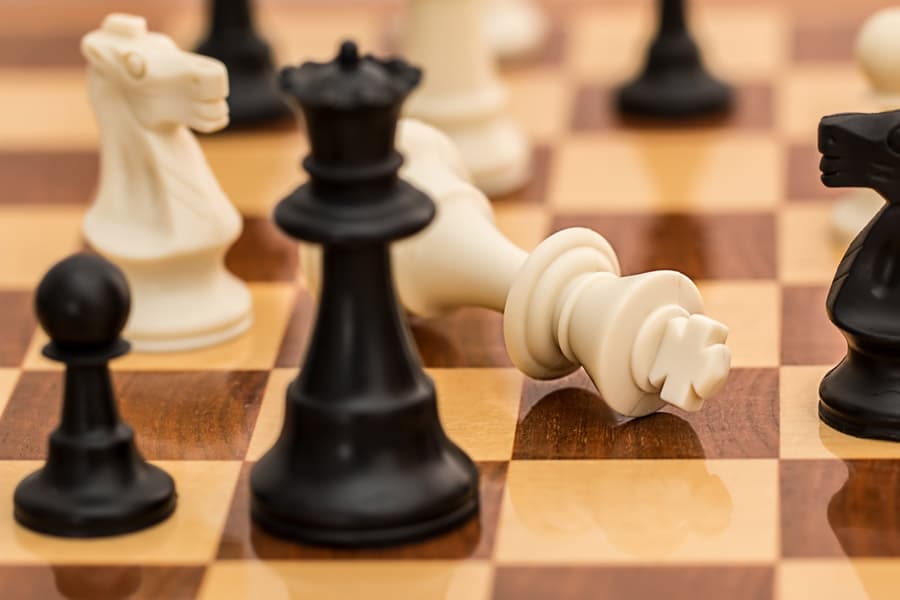
What is a Swiss-System Tournament?
The Swiss-system tournament format was first used at a chess tournament in Zurich, Switzerland in 1895. In this format, all participants play the same number of rounds, and each round pairs players with similar records against each other.
Unlike round-robin (where everyone plays everyone) or single elimination (where one loss means elimination), the Swiss system combines the best of both formats.
How Swiss-System Works
In a Swiss-system tournament, pairings for each round follow these rules:
- Round 1 pairings are random or based on seeding
- Subsequent rounds pair players with the same win-loss record
- Players cannot face the same opponent twice
- If there's an odd number of players, one receives a 'bye' (automatic win)
- Final standings are determined by points and tiebreakers
Example: 8 Players, 3 Rounds
Let's look at an example of a 3-round Swiss tournament with 8 players (A through H).
1 Round
2 Round
3 Round
Scoring System
In a typical Swiss tournament, points are awarded as follows:
- Win: 1 point (or 3 points)
- Draw: 0.5 points (or 1 point)
- Loss: 0 points
Pros and Cons
The Swiss system has several advantages and disadvantages:
Advantages
- Everyone plays the same number of rounds
- One loss doesn't eliminate you from the tournament
- Fewer games than round-robin while still determining rankings
- Competitive matches as similar-skilled players face each other
- Efficient for large tournaments
Disadvantages
- Final standings can be less intuitive
- Understanding tiebreakers is necessary
- Pairing calculations are complex (solved with tools)
- Top players may not face each other directly
- Format may be unfamiliar to some participants
Comparison with Other Formats
Here's how Swiss-system compares to elimination and round-robin formats:
| Aspect | Swiss System | Elimination | Round Robin |
|---|---|---|---|
| Games per player | Same for all | Winners only | Same for all |
| Elimination | None | After 1 loss | None |
| Total games | Medium | Minimum | Maximum |
| Organization | Moderate | Easy | Complex |
| Ideal size | 16-128 players | 8-64 players | 4-12 players |
Calculating Required Rounds
The number of rounds needed to accurately determine standings can be calculated from the number of participants.
Formula: Rounds = ceiling of log₂(participants)
This gives us the following guidelines:
| Participants | Recommended Rounds |
|---|---|
| 8 | 3 rounds |
| 16 | 4 rounds |
| 32 | 5 rounds |
| 64 | 6 rounds |
| 128 | 7 rounds |
| 256 | 8 rounds |
Tiebreakers
When multiple players have the same points, tiebreakers determine final standings. Here are the most common ones:
Buchholz
The sum of your opponents' scores. Players who faced stronger opponents get higher Buchholz scores. This is the most common tiebreaker in chess.
Example: If Player A's opponents had scores of 3, 2, and 2, their Buchholz would be 7.
Median Buchholz
Buchholz with the highest and lowest values removed. This reduces the impact of extreme values.
Sonneborn-Berger
The sum of defeated opponents' full scores plus half of drawn opponents' scores. Players who beat stronger opponents score higher. Primarily used in round-robin tournaments.
Opponent Match Win Percentage
The average win rate of your opponents. Commonly used in TCGs (Trading Card Games).
Game Win Percentage
Your win rate in individual games within matches. Used in best-of-three (Bo3) formats.
Head-to-Head
The result of direct matches between tied players determines ranking.
Use Cases
Swiss-system tournaments are used in many different contexts:
Chess
As the birthplace of the Swiss system, chess uses it extensively from open tournaments to Grand Prix events. FIDE (World Chess Federation) includes Swiss-system rules in its official regulations.
Trading Card Games (TCG)
Magic: The Gathering, Pokémon TCG, and Yu-Gi-Oh! all use Swiss-system for official tournaments. Typically, Swiss rounds serve as qualifiers, with top players advancing to a single-elimination finals.
Esports
Swiss-system is used for qualifier rounds with large participant pools. CS2 Major tournaments use a 'Buchholz Swiss' format for their group stages.
Board Games
Many board game tournaments, including Shogi, Go, and Othello amateur events, use Swiss-system for fair competition.
Frequently Asked Questions (FAQ)
What happens with an odd number of participants?
With an odd number of players, one player receives a 'bye' each round, counting as an automatic win. Byes are typically given to the lowest-ranked player that round, and no player receives more than one bye during the tournament.
Can you face the same opponent twice?
Generally no. Swiss pairing rules prevent rematches. However, with very few participants or many rounds, rematches may occasionally occur.
How many rounds should I run?
The recommended number is ceiling of log₂(participants). For 16 players, that's 4 rounds; for 32 players, 5 rounds. You can adjust based on time constraints.
Which tiebreaker should I use?
It depends on your game. Chess typically uses Buchholz, while TCGs use Opponent Match Win %.
How are final standings determined?
First by points, then by tiebreakers in order.
Try it now
Create tournament brackets, league tables, and Swiss draws for free with THE TOURNAMENT
Get Started